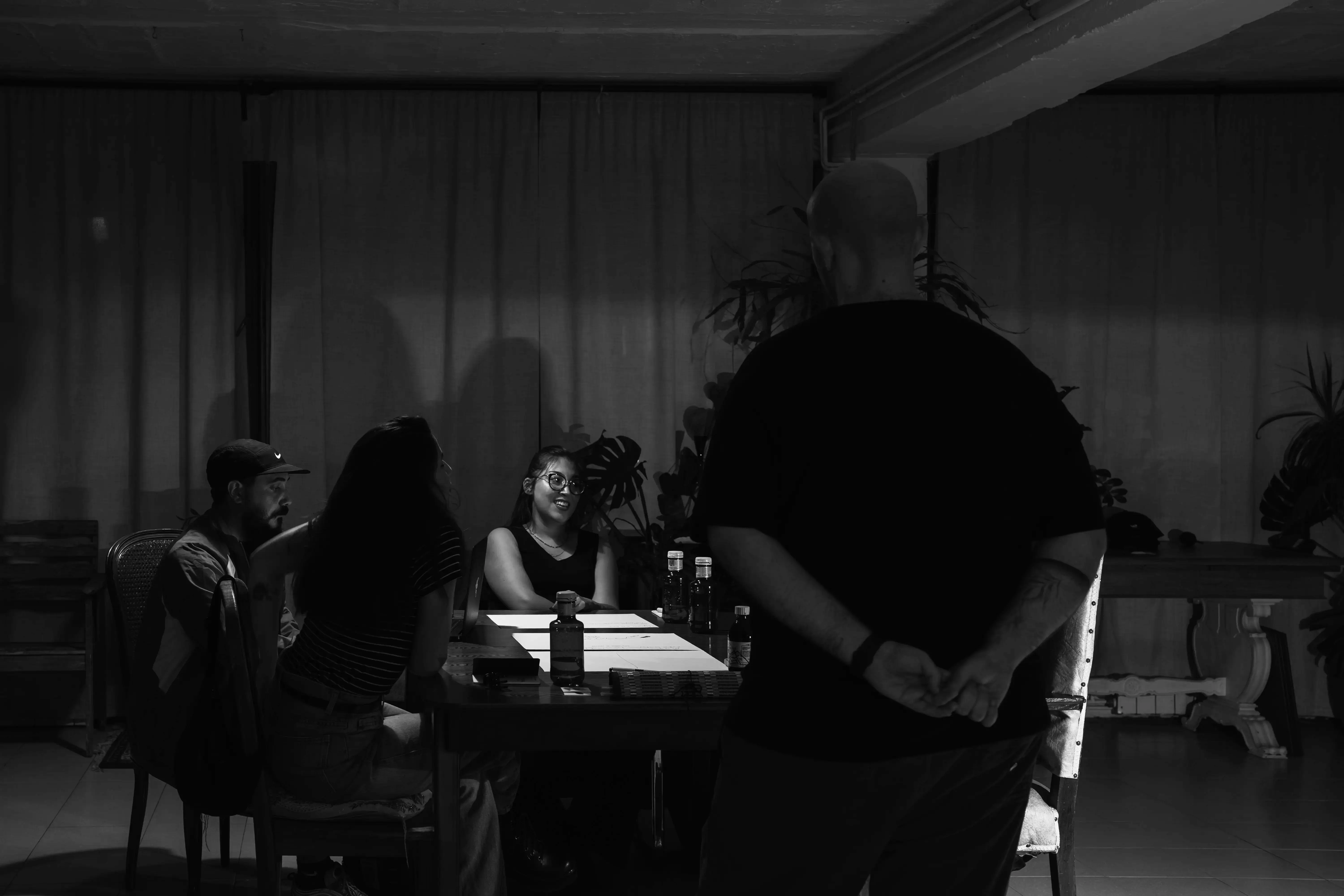
COLAB Sessions
A framework for deciding what to delegate to AI and what to preserve as human gesture.
Built for designers who think before they generate.
Intensive workshops where human creativity meets machine intelligence to create what neither could achieve alone.
Our sessions compress discovery, ideation, and prototyping into focused intensives that produce functional hypotheses, not just concepts.
The Challenge
“Intelligence has always been collaborative. The question is how to structure that collaboration.”
Design teams are caught between two failing approaches.
Traditional methodologies (built for whiteboards and sticky notes) move too slowly for today's pace. A 5-day sprint feels like a luxury most teams can't afford, and by the time you've validated anything, the context has already shifted.
Meanwhile, AI tools promise instant output but often produce generic results. Teams jump straight to generation without understanding the real problem. They get beautiful mockups that solve the wrong thing, or technically impressive prototypes disconnected from actual user needs.
The gap isn't in the tools. It's in the methodology.
Most AI-augmented design workflows skip the most critical step: framing. They treat AI as a production accelerator rather than a thinking partner. The result is faster output of the same mediocre work, or worse, confidently wrong solutions delivered at unprecedented speed.
What's missing is a framework that treats human judgment and machine capability as collaborative forces. One that compresses the essential work of understanding (problem, actors, context) into a structure that AI can actually help with. Not replacement. Partnership.
This framework starts from a position: design problems don't get solved by applying known solutions faster. They get solved by decomposing the problem into its irreducible parts before elaborating. AI becomes useful after that decomposition, not before.
That's what COLAB sessions are built to do.
From Idea to Hypothesis
Four steps. One afternoon.
Problem
DecompositionActors
Mapping the systemContext
Locating the forcesHypothesis
Where AI entersDefine the problem in one or two lines. Not the solution you think you need to build. Not the feature request from stakeholders. The actual problem (as the designer interprets it) that needs to be solved. This forces clarity. Most projects fail because teams build solutions to problems they never properly articulated.
"In two sentences maximum: what problem are you solving?"
Who are the actors involved in this structure? Map the stakeholders, not just the end users, but everyone who participates in or is affected by the system you're trying to improve. Decision-makers. Influencers. Those with power and those without it. Understanding the actor landscape reveals constraints and leverage points.
"List every person or role that touches this problem. Who has power? Who doesn't?"
An exhaustive but focused description of where this problem lives. Not a novel. A precise articulation of the environment in which this problem, with these actors, is currently operating. Technical constraints. Organizational culture. Market dynamics. Historical attempts and why they failed. Context determines what solutions are even possible.
"Describe the world this problem exists in. What forces shape it?"
Based on Problem + Actors + Context: what should be built, and how? This is where AI becomes genuinely useful. With a well-defined problem, clear actor map, and rich context, generative tools can produce meaningful variations, not generic outputs. The hypothesis is testable. It creates the foundation for rapid iteration with clear success criteria.
"Given everything above: what do you believe should be built? How would you know if it worked?"
Why This Framework Works
Immersion
Teams embed themselves in the problem space before touching any tools. Understanding comes first.
Documentation
Every iteration is recorded. What doesn't work reveals gaps in understanding. What works becomes a pattern.
Restraint
AI is held back until the problem is properly framed. Most workflows fail because they invert this order. Restraint at the start makes generation meaningful at the end.
AI Integration
The framework is designed for the current moment. It structures the collaboration between human insight and machine capability.
Beyond the Workshop
COLAB sessions are the applied arm of deeper research into human-AI collaboration.
Every workshop generates data about how humans and machines negotiate creative decisions, and what remains distinctly human in that process.
This work connects to “Iteradores”, ongoing research exploring “lo indigestible”: the elements of human creativity that resist algorithmic processing.
The framework is an answer to a more specific question: which parts of the design process resist formalization and must remain human gesture, and which parts can be delegated to the system without loss? COLAB is one applied answer. The broader inquiry continues at Taller Oliva.
Explore the research at Taller OlivaHow a Session Unfolds

Setting the stage

Building the framework
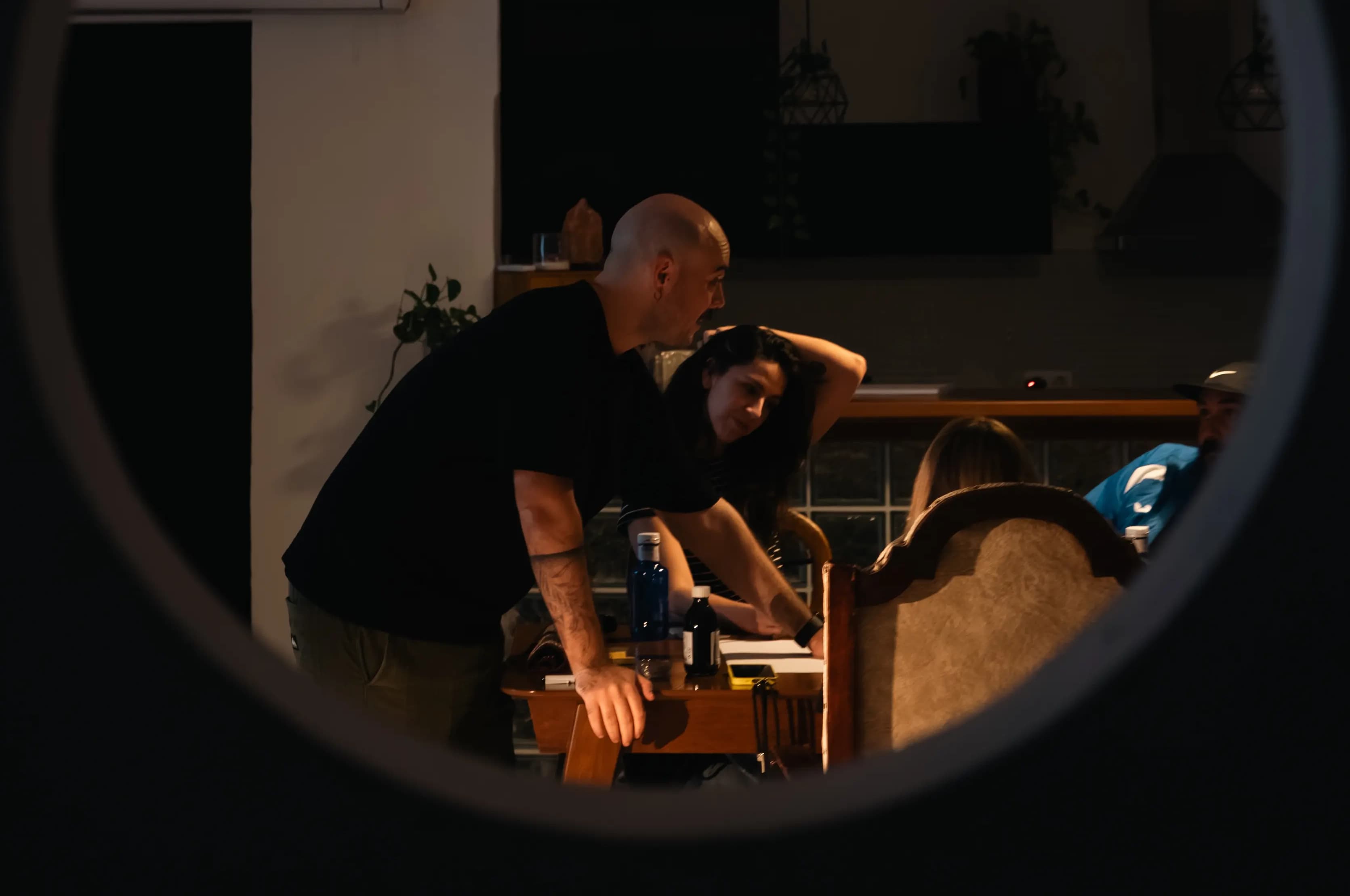
Mapping the landscape
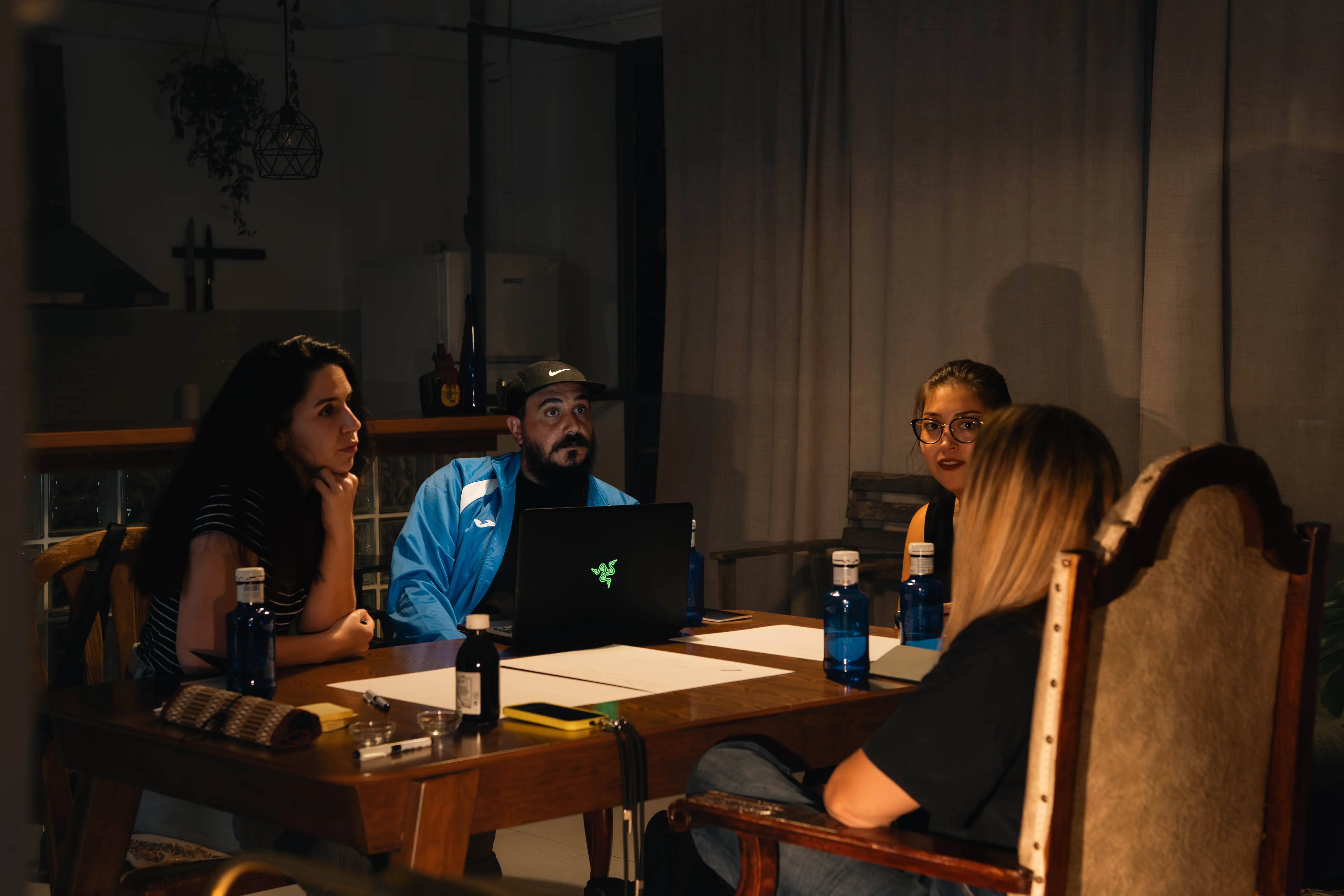
Hypothesis to prototype
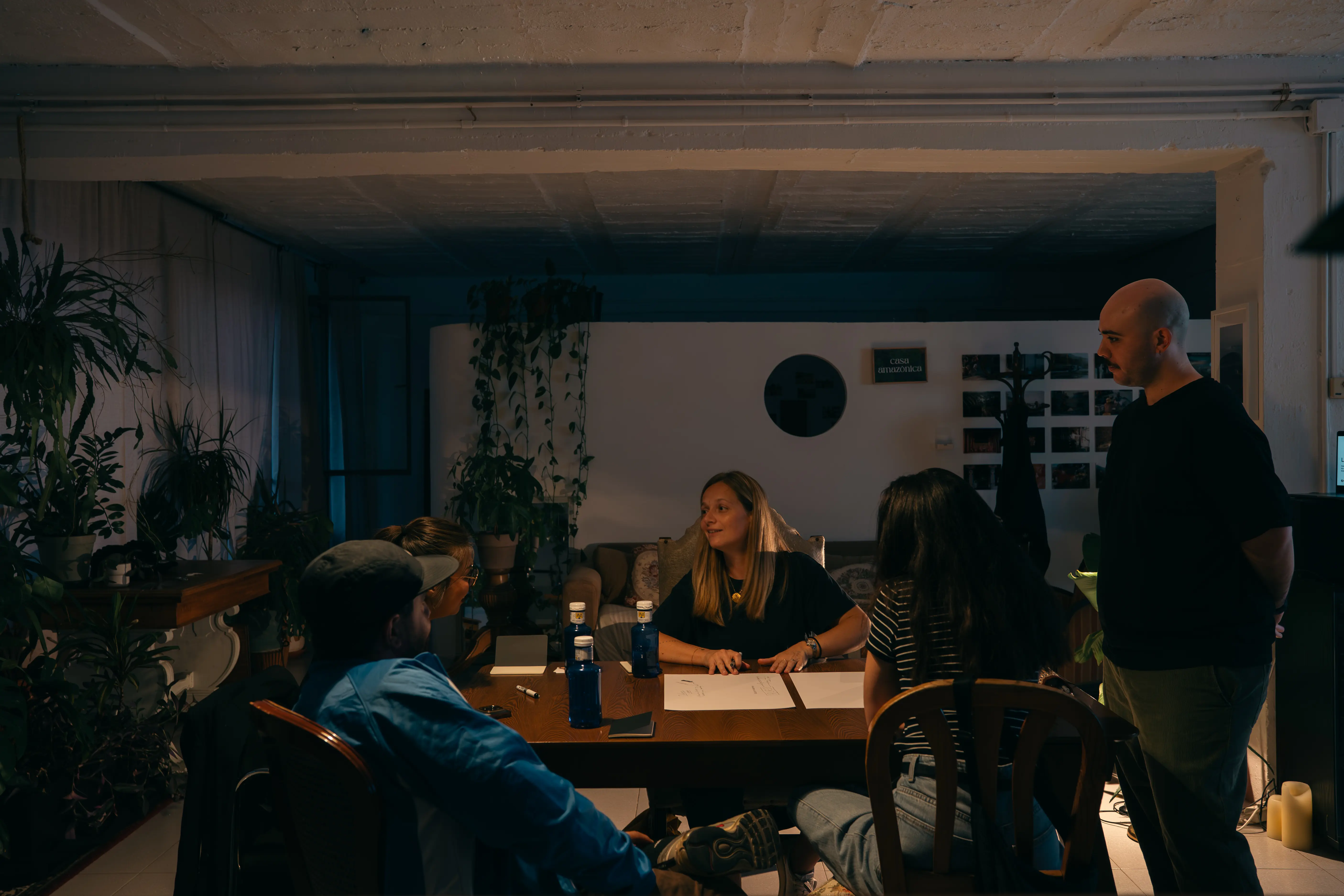
Disciplined iteration

Testing the hypothesis

From idea to validated direction
What Participants Say
"I see huge potential in this approach for prototyping and bringing ideas to life quickly. While AI can be an accelerator, it still depends on our ability to communicate clearly and do solid preparation before we start creating."
"A fascinating exploration into collaborative design, focusing on integrating AI tools into our workflow. Beyond the technical aspects, the atmosphere was outstanding."
"I was surprised by how easy and fast it was. Creating a functional prototype just by explaining the problem made the system generate something very usable, and it even proposed ideas beyond what we had thought of."
"The workshop format was spectacular. The tool felt super easy and intuitive, very friendly from the first use."
Applied At

IED Barcelona
AI & Prototyping Lab
Master in Visual Communication
Design for Interaction and Extended Realities
35+ master's students across multiple sessions and classes, using the COLAB methodology to transform their ideas into functional prototypes.

In Partnership with v0 by Vercel
Two intensive sessions in Barcelona where designers explored AI-native tools to bring their ideas to life. v0 served as the primary prototyping environment for the COLAB methodology in action.
Other Applications
Who It's For

Design Studios
Integrating AI into creative workflows without losing the human touch. Maintaining craft while expanding capabilities.

Universities
Transforming design pedagogy through validated methodologies. Preparing students for collaborative intelligence futures.

Innovation Teams
Breaking through traditional constraints with radical collaboration approaches. From concept to prototype in hours.

Cultural Institutions
Exploring new forms of creativity at the intersection of human and machine intelligence.
Session Formats
Sprint
One Afternoon2+ participants Framework + 1 hypothesis
Immersion
Full Day2-10 people Multiple hypotheses + methodology training
Transformation
3 DaysEntire teams Full implementation
Consultation
1 HourExploratory call Assess fit
Ready to explore collaborative intelligence?
Email: sessions@talleroliva.com
Based in Barcelona, available globally